Opening a Billiard Hall — Equipment Planning and Budget Guide
What equipment line items go into a billiard hall, what drives the cost of each, and how to get a reliable supplier quote.
Opening a billiard hall is an equipment-heavy investment: most of the money goes onto the floor on day one, and the condition of that equipment defines the hall's reputation for years. This guide covers which line items enter the budget and what drives the cost of each.
Why we quote no figures: table, cloth and ball prices vary by brand, domestic or imported production, exchange rates, shipping and installation terms, with a second-hand market on top. Second-hand numbers go stale fast. So below you will find a method for getting the right quote rather than a price list. The one exception is our own products, whose current prices we publish.
First decision: hall type
- Carom hall: the common model in Türkiye. Three-cushion focused, creating a regular clientele that is sensitive to equipment quality.
- Pool hall: 8-ball and 9-ball tables. Younger, more social use with faster table turnover.
- Mixed hall: both disciplines. More floor space and equipment variety, but a broader customer base.
Line items and what drives their cost
1. Tables — the largest item
Cost drivers: number of tables, carom or pool, imported or domestic, slate thickness and quality, cushion rubber, whether the table is heated (common in carom), shipping and installation. Installation is often a separate item — ask about it explicitly.
2. Cloth
Cost drivers: brand and weight, carom versus pool, table count and replacement frequency. Cloth is a consumable; in a busy hall the annual replacement cycle drives the budget more than the initial fit.
3. Balls
Cost drivers: number of sets, maker and series. Ball sets wear too; a quality set lasts longer and holds its playing feel.
4. Lighting
Cost drivers: fixtures per table, LED panel versus classic pendant, mounting height and electrical infrastructure. Lighting directly shapes the playing experience — it should be the last item you economise on.
5. House cues
Cost drivers: quantity, wood-to-carbon mix and replacement frequency. House cues wear out fastest of all.
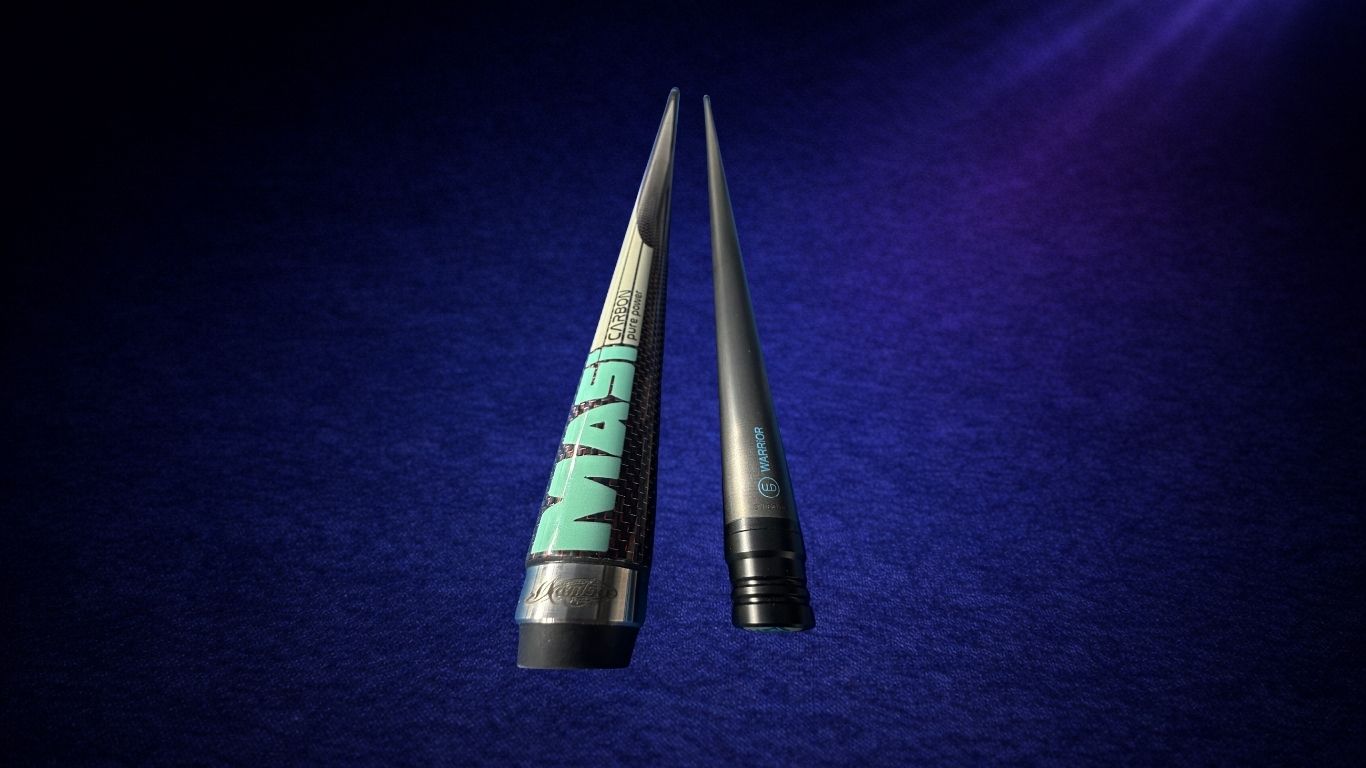
A common approach: mostly classic wooden cues plus a few premium carbon cues offered for a fee. The second group is both an extra revenue line and a draw for serious players. Our current prices: Zafira €1,280, Titan X €1,370, Warrior carbon shaft €413 — see the products page.
6. Accessories and consumables
Chalk, mechanical bridges, racks, tip tools, cue racks and scoreboards. Individually small, collectively a steady recurring cost.
7. Premises
Renovation, flooring, ventilation, furniture, bar equipment, till and sound system. These vary most with location and the state of the unit you take on.
Questions to ask before signing
- Do the prices include shipping and installation? How many days does installation take?
- Is cloth included in the initial fit — which brand and weight?
- What exactly does the warranty cover: slate, cushion rubber and the wooden body separately?
- Who performs cushion and cloth replacement, and is that service in your city?
- How long does spare-part supply take?
- At what quantity does bulk pricing change?
- Are the payment plan and delivery schedule in writing?
Get quotes from at least three suppliers on identical scope. A comparison that does not equalise scope is misleading — one quote may include installation while another does not.
Operating cost items
Plan monthly costs alongside the initial investment: rent, electricity and heating (table lighting runs continuously), staff, cloth and ball replacement, house cue maintenance, cleaning, insurance, music licensing and any bar costs. Actual amounts depend on city, floor area and opening hours, so realistic numbers only come from quotes for your own location.
Model the revenue yourself
Hall revenue comes from three sources: table rental by the hour, bar or snack sales, and extras such as tournaments, coaching and memberships.
A simple frame for table revenue:
number of tables × open hours per day × average occupancy rate × hourly rate
All four variables are specific to you — local price levels, footfall, weekday-versus-weekend split and seasonality. That is why ready-made turnover tables and "pays for itself in X months" claims circulating online are not reliable. Observe the hourly rates and busy periods of existing halls in your area and build your own table.
Why equipment quality is an economic decision
Repeat customers know equipment. Worn cloth, dead cushions and warped house cues are the top three reasons a customer moves to a competitor. Well-kept tables and straight cues, by contrast, make the upper end of your hourly rate defensible.
Carbon cues offer a practical advantage here: they do not warp with humidity, need no surface maintenance and hold their dimensions — so loaned equipment lasts longer. The technical explanation is in carbon vs wooden cues.
Supply for your hall
To discuss premium carbon cue supply, bulk purchase or dealer terms for your hall, reach us through the contact page. Specifications and current prices are on the products page.