1-Cushion Carom Practice — Beginner Drills
1-cushion carom is the foundation of three-cushion and free carom. The right drills build cushion angle, controlled stroke and diamond system fundamentals.
1-cushion carom is the cornerstone of every modern carom discipline. Both three-cushion and free carom players learn cushion entry angle, speed control and diamond system math here. With well-ordered drills, a player builds conscious cushion reading within a few months.
Drill 1: Straight Return
Place the cue ball 30 cm from the middle of a short rail. Strike it dead-center into the middle of the same rail. The ball must return to its starting point. This drill exposes whether the stroke is truly straight; deviation means a cue alignment or wrist issue.
Drill 2: 1-Cushion Angle
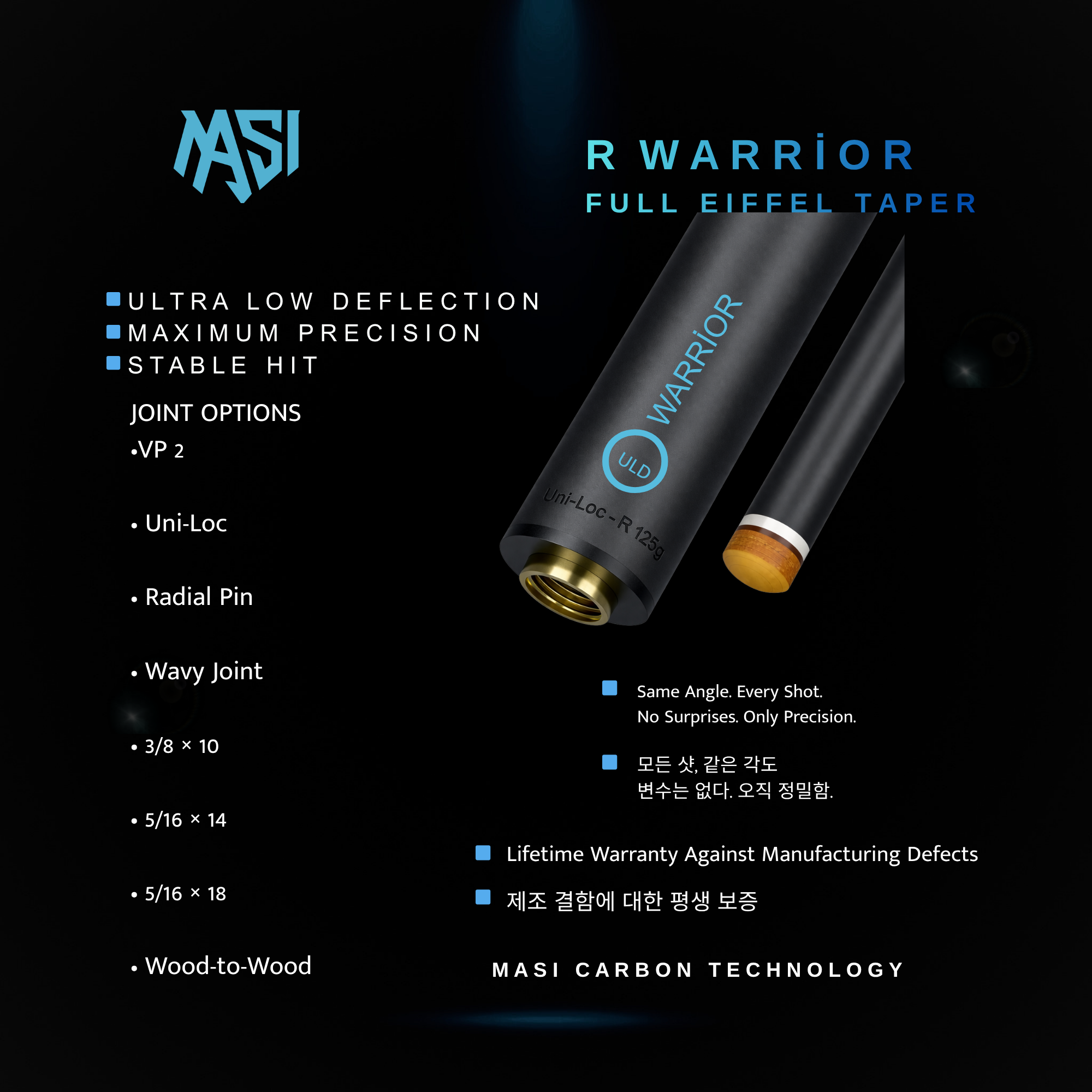
Set up a simple position with cue ball, red and white, with a long rail between cue ball and white. Goal: send the cue ball into the long rail and contact the red. This drill teaches angle in = angle out intuitively. The low deflection of carbon shafts minimizes angular drift; the player only thinks about angle and speed.
Drill 3: Diamond System Introduction
The diamond markers on a carom table are the map of angles. Send the cue ball from diamond 3 to diamond 1 on the opposite rail. Observe the entry and exit lines. This base system later supports three-cushion 5-vs-5 calculations.
Drill 4: Speed Control
Repeat the same shot at three speeds: slow, medium, hard. Note where the cue ball ends. This drill shows speed's effect on angle, because hard hits 'shorten' the rail and slow hits 'lengthen' it.
Drill 5: Side English and Rail Angle
Pick a target and send the cue ball with center hit, then slight right side, then slight left side. Observe how the cushion behaves. Side English aggressively alters exit angle. The slim tip of Warrior R Carbon shafts delivers stable results in these contact-sensitive drills.
Drill 6: Parking the Cue Ball
The real challenge of carom is not only scoring but parking the cue ball for the next point. After every carom, consciously study where the cue ball stopped, and plan the next point from there. Position discipline comes before skill.
Next Step: Transition to 3-Cushion
A player who reaches 30+ average in 1-cushion will pick up three-cushion systems much faster, because angle reading, stroke straightness and speed awareness are already built. Carbon shafts add consistency during the transition phase.