How to Become a Professional Billiards Player — Step by Step

From choosing a discipline to licensing, training structure, the tournament ladder and sponsorship — a realistic map of the professional path.

How to Become a Professional Billiards Player — Step by Step

A professional career in billiards is possible — Türkiye in particular produces world-class three-cushion players. This guide maps the path step by step.

Note: we quote no prize, coaching or income figures here. Those vary by tournament, year, federation budget and sponsorship deal, and the fixed numbers circulating online are usually unsourced. Check federation and tournament announcements for current information.

1. Choose a discipline

  • Three-cushion carom: Türkiye's strongest discipline, with developed local tournament infrastructure and club culture.
  • Pool (9-ball, 10-ball): the largest international tournament calendar, with more travel and language demands.
  • Snooker: a UK-centred ecosystem; infrastructure in Türkiye is comparatively limited.

Focusing on one discipline for the first two to three years produces faster progress than splitting your attention.

2. Licensing and federation

Competing officially in Türkiye requires a licence from the Turkish Billiards Federation (TBF): apply through your provincial billiards representative, submit the required documents, pay the licence fee and receive the licence. Fees, documents and age categories change periodically, so confirm them directly with the federation or your provincial office.

3. Training structure

What separates amateurs from professionals is less the number of hours than the structure of training:

  • Technical block: stance, bridge and stroke plane, with repetition and video.
  • Position work: systematic repetition of set positions with a success-rate log.
  • System work: diagram and calculation systems in carom.
  • Match simulation: scored, timed, pressured play.

You cannot improve what you do not measure: record how many of a fixed position set you make in each session. See our solo practice article for a programme.

4. Coaching and clubs

A good coach reveals technical faults in weeks that you might not notice for years. The practical route is contacting clubs that compete in tournaments in your area. A club also means regular opponents — match psychology cannot be built alone. Rates vary by coach, city and frequency; settle them directly.

5. Equipment

On the road to turning pro, equipment exists to reduce variables: same cue, same tip, same measurements. The more the equipment changes, the harder it is to read the source of an error.

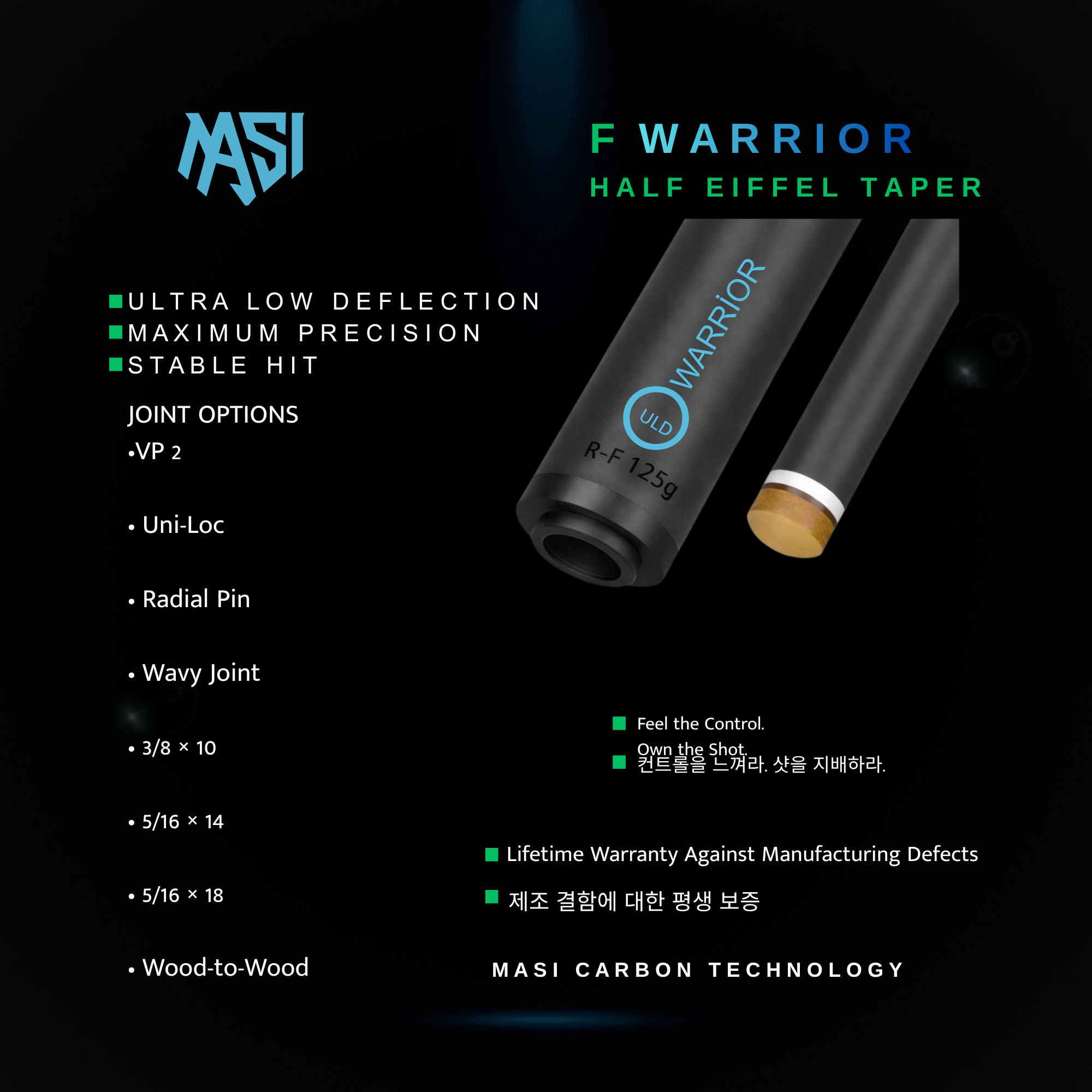
Past a certain point, moving to a cue built to your own measurements makes sense: weight, balance, shaft model, tip and joint standard set to your preference. Masi Carbon cues are made to order within 380–600 g; current prices are on the products page (Zafira €1,280, Titan X €1,370, Warrior carbon shaft €413).

See the sizing guide and the weight guide for how to decide. A hard case, a tip maintenance kit and spare tips complete a travelling player's kit.

6. The tournament ladder

  1. Club and local tournaments: getting used to match tempo.
  2. Provincial and regional events: your first official test with a licence.
  3. National championship tiers: the category and ranking system.
  4. International tournaments: through federation quotas and invitations.

These steps cannot be skipped: without ranking points and a results record, entry to higher tournaments is generally not possible.

7. Sponsorship

Sponsorship follows a results record and visibility. Brands look at more than ranking: consistency of tournament participation, visibility and how you represent a brand.

Be concrete when you approach one: two years of results, the events you played, your target calendar and the support you are asking for (equipment, travel, entry fees). We publish the athletes we work with on the Pro Team page.

8. Realistic expectations

Income in billiards combines prize money, sponsorship, coaching and club or hall work. The number of players living on prize money alone is limited in every country, and amounts differ greatly between events.

The common and healthier route in the early years is diversifying income: running coaching or club work alongside your tournament calendar. It lowers the pressure and keeps you playing.

Related posts

WhatsApp