Pool Break Shaft Selection Guide — Maximum Power Transfer
Break shaft selection criteria for pool players: stiffness, weight, diameter, structure. Advantages of carbon fiber break shafts.
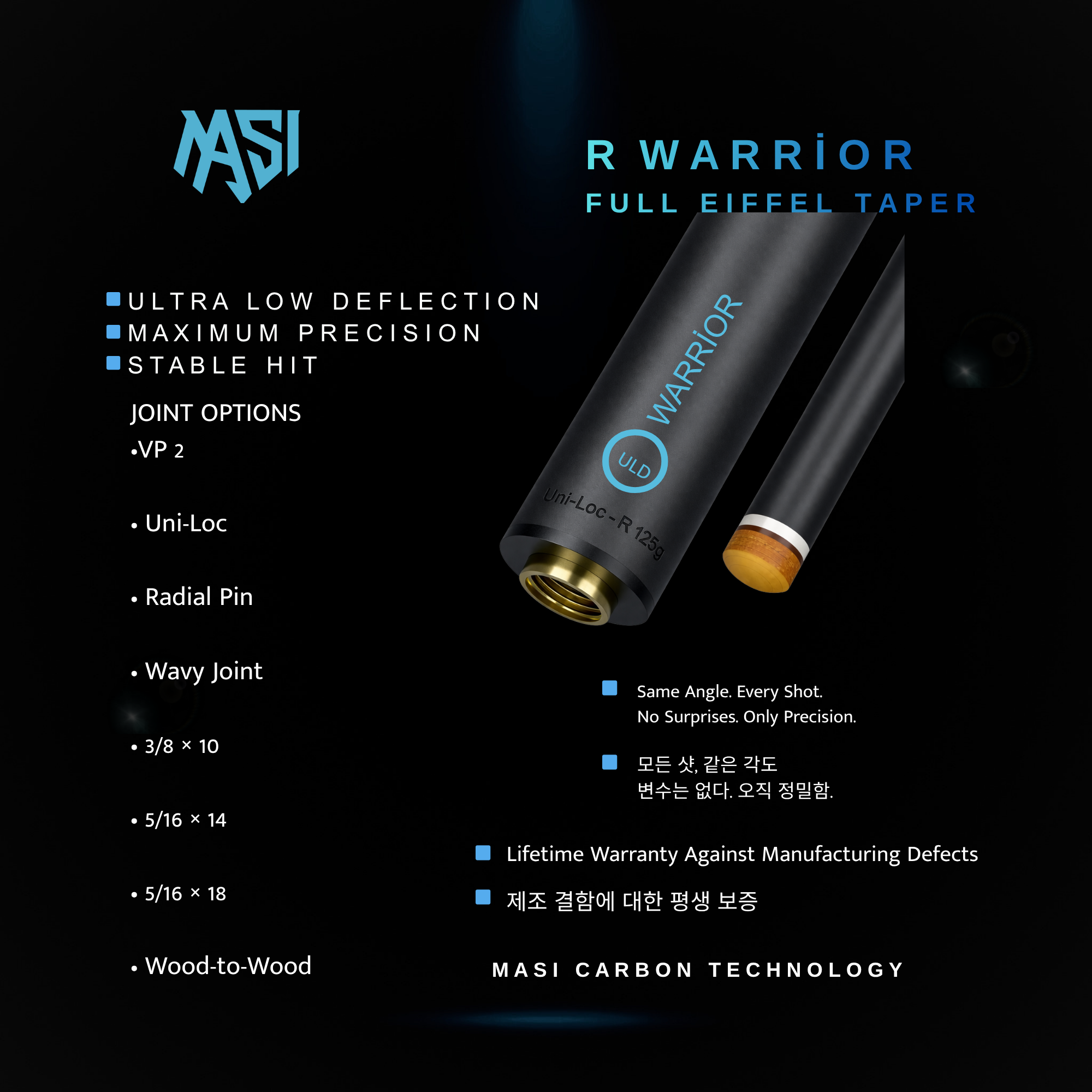
TL;DR — Ideal pool break shaft: hard stiffness, 11.9 – 12.2 mm diameter, heavy shaft (105 – 160 g), hard tip. C Warrior conical structure provides maximum power transfer — critical for ball spread after break.
Why Is Break Shaft a Separate Shaft?
The break shot in pool requires maximum power — you need to spread 8-15 balls in a single strike, you cannot risk a soft strike. A shaft optimized for standard positional play falls short on breaks: high damage risk, low power transfer. That's why pro players use a dedicated break shaft.
1. Stiffness: Hard or Medium-Hard
During break, the cue strikes the ball at 30+ km/h. The shaft must withstand:
- High instantaneous impact pressure
- Shock wave and vibration
- Tip compression and rebound
Hard stiffness (C Warrior type) withstands these challenges while transferring energy to the ball with maximum efficiency. Medium-soft or soft shafts absorb energy at break, weakening ball spread.
2. Diameter: Wider Is Better
11.9 – 12.2 mm diameter is recommended for break shaft. Reasons:
- Larger contact surface → less slip risk
- Higher tip durability
- Wide diameter provides error tolerance on bad strikes
Positional 11.8-11.9 mm diameters are thin for break — frequent tip replacement needed.
3. Weight: Heavy > Light
Break shaft is generally 105 – 160 g, total cue weight 540-620 g. This heavy configuration maximizes momentum — in F = m × a, when m increases, more force is produced at the same velocity.
4. Structure: Conical
Conical structures like C Warrior are ideal for break. With the shaft's uniform thickening, energy is transferred to the tip without loss along the shaft. Full Eiffel or half Eiffel structures are good positionally but soft at break — energy is absorbed in the shaft.
5. Tip: Hard Phenolic or Hard Leather
Break tips fall into two categories:
- Phenolic tip: Very hard, maximum power transfer. Banned in some tournaments (check).
- Hard leather tip: Tournament-legal, slightly less power but still firm.
Phenolic options: Predator BK, Mezz Hammer. Hard leather: Kamui Hard, Gorina H.
6. Joint Standard
The joint takes the highest stress during break. 5/16×14 standard is the safest profile — provides long-lasting and strong connection. Quick-release joint is risky for break, constant tightening-loosening creates thermo-mechanical fatigue.
7. Compatibility With Cue
Can the break shaft fit on the same butt as your normal positional cue? If joint profiles match, yes — this way one butt can use two shafts. Otherwise a dedicated break cue is needed.
8. When Should You Get a Separate Break Shaft?
- If you play 5+ hours of pool weekly
- If you participate in tournaments
- If tip wear after break on your positional shaft is excessive
- If you are tired of the constant need for new ones
Otherwise, your standard positional shaft may be sufficient for break.
9. Common Mistakes
- Using positional shaft on break and busting the tip
- Wrong tip hardness selection (very hard phenolic + cheap balls)
- Too light break shaft (under 90 g) — insufficient momentum
- Low-quality break cue — joint breaking risk
10. Recommended Pool Break Configurations
- Pro level: C Warrior 12.4 mm + Hard Phenolic, 125 g shaft, 580 g total
- Semi-pro: C Warrior 12.2 mm + Hard Leather, 120 g shaft, 560 g total
- Amateur: F Warrior 12.0 mm + Medium Hard, 115 g shaft, 540 g total
Conclusion
Pool break shaft has different design principles than positional shaft. Hard stiffness, wide diameter, heavy configuration and hard tip — the four pillars of break performance. Thanks to its conical structure, C Warrior is the ideal choice for break. Examine the C Warrior page or Warrior Shaft Series.