Carbon Shaft vs Maple Shaft — Which Is Better For You?
Detailed comparison of carbon fiber shaft and traditional maple shaft in terms of performance, durability, price and player feel.
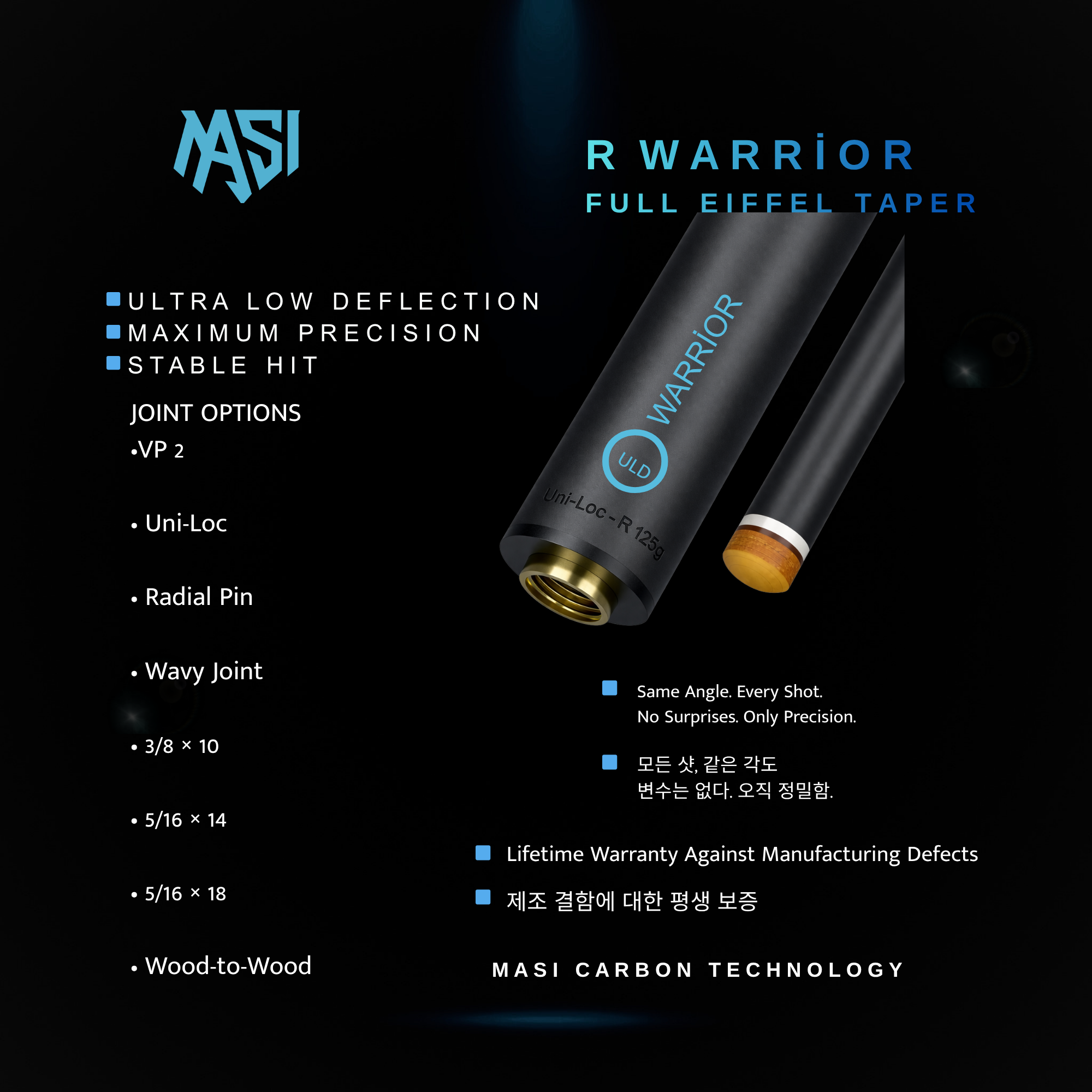
TL;DR — Carbon fiber shaft offers low deflection, long lifespan and humidity resistance; maple shaft offers traditional feel and lower entry cost. Professionals prefer carbon, economy-minded amateurs prefer maple.
Performance Comparison
Low deflection: Carbon fiber shafts automatically offer low deflection — the structure provides it. Maple shafts require dedicated technology (Predator Z3, OB Cue Pro etc.) for low deflection; it is not native.
Consistency: Carbon fiber delivers the same performance over thousands of strikes. Maple shafts can develop micro-cracks over time, slowly reducing performance.
Durability and Lifespan
Carbon fiber: 15-20+ years. Unaffected by humidity and temperature. Only tip replacement needed.
Maple: 5-7 years. Can warp in high humidity, crack in cold. Requires regular oiling and waxing.
Price Analysis (10 Year)
Carbon fiber shaft ($800 average): single purchase for 10 years. Total cost: ~$800 + tip (every 1.5 years $20) = $920.
Maple shaft ($150 average): 2 replacements over 10 years. Total: $450 + tip + maintenance materials ($30/year) = $750.
Result: Carbon fiber is approximately $170 more expensive — but provides far less maintenance and guaranteed consistent performance.
Strike Feel (Subjective)
Maple shaft offers "warm", organic feedback — the natural vibration spectrum of wood. Carbon fiber offers a "cleaner" and less vibrational feel — some players find this difference sterilized, others get better response.
An important note: After 2-3 weeks of practice with carbon fiber, most players adapt to the new feel and don't consider going back.
Which Players Prefer Which?
Choose carbon fiber:
- Professional or semi-pro players
- Frequent traveling players
- Long-term investment minded
- Those who value low deflection technology
- Those who prefer modern technology
Choose maple:
- Beginning players (low entry cost)
- Those who seek traditional feel
- Budget-priority amateurs
- Players emotionally attached to "wood feel"
Hybrid Approach: Both
Many pro players own multiple shafts — one for break, another for positional play, another for practice. Carbon fiber for positional and maple for break is a good combination.
Decision Framework
1) Do you play 100+ hours per year? Yes → carbon fiber.
2) Is your budget above $500? Yes → consider carbon.
3) Do you regularly play in different cities/climates? Yes → carbon fiber definitely.
4) Will you miss the "wood feel"? Yes → maple.
Conclusion
Both technologies are valid — choice is made by need. Carbon fiber for professionals and long-term players, maple for beginners and traditional players. To explore the Masi Carbon Warrior series click here.