Snooker Long Pot Technique — Carbon Shaft Advantage
Long potting separates elite snooker players from amateurs. Correct cueing, fine contact and the low deflection of carbon shafts unlock this shot.
In snooker, the long pot is a potting shot that crosses almost the full length of the table — and it is one of the most demanding shots both technically and mentally. Long pot success percentage is one of the most-quoted stats in pro tournaments because it correlates directly with frame-winning probability.
Foundation: Cueing
A long pot demands true cueing — the cue traveling in a straight line toward the target. Body alignment, chin contact on the cue and forearm swing must align on one plane. A tiny deviation translates into a large miss when the ball must travel the full table.
Bridge and Stance
A solid bridge and stable stance are non-negotiable. An open bridge can tremble under pressure; a closed bridge gives more control but needs time to learn. Stance, with feet aligned and front knee softly bent, anchors the body like a rock. The cue must move; the body must not.
Fine Contact Discipline
The contact point on the object ball is often a narrow patch. Thick contacts push the ball sideways; over-thin contacts collapse the shot. Pros lock their eyes on the target point and let the cue tip leave their awareness in the final stroke — a psychological technique that boosts contact precision.
The Carbon Shaft Advantage
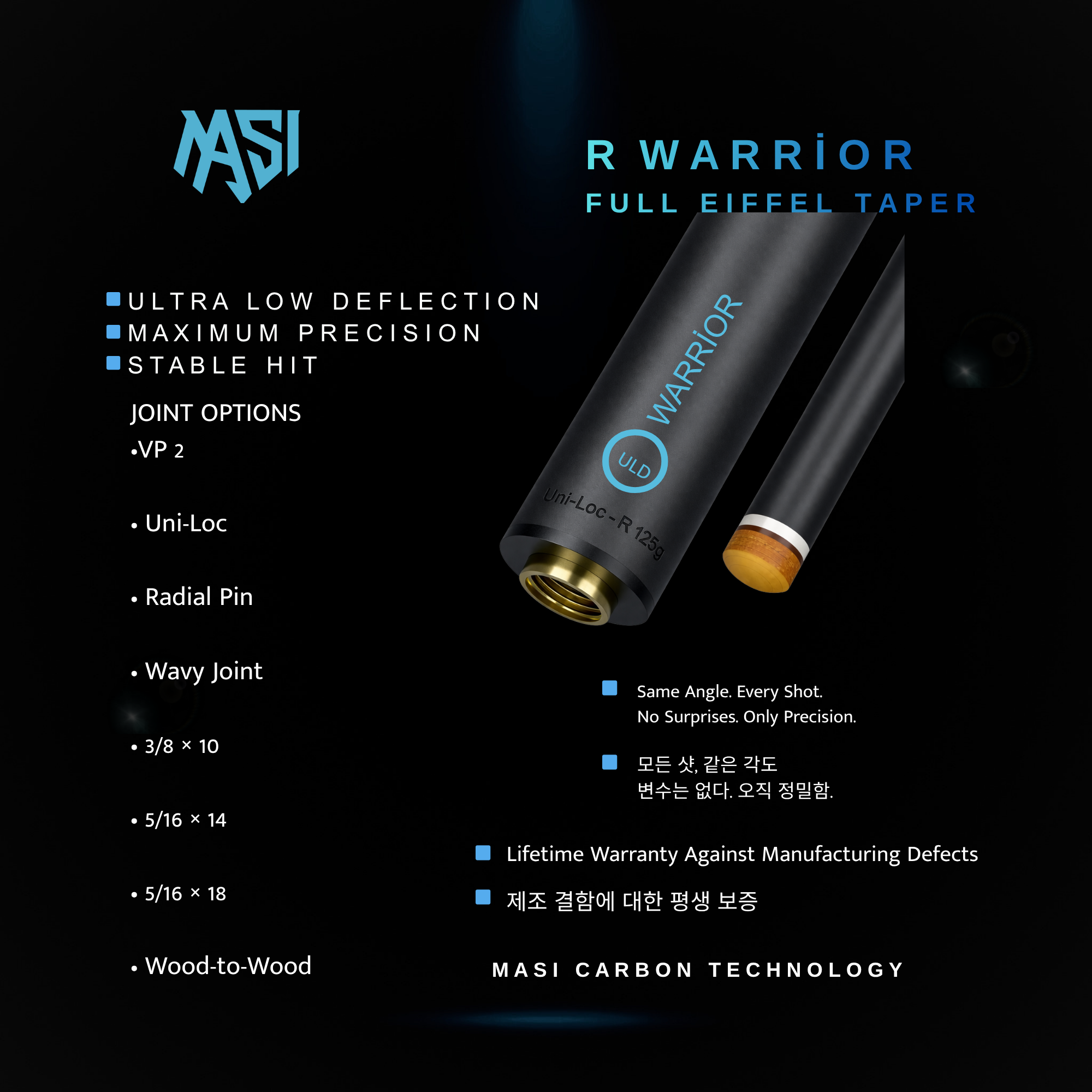
Snooker has traditionally been played with ash or maple, but carbon shaft adoption is rising. The Masi Carbon snooker shaft delivers two long-pot advantages: less compensation aiming due to lower squirt and a more stable cue ball line over distance. It also resists humidity and temperature drift that throws off wood-shaft calibration.
Position Thinking
A long pot is not only about potting — it is about controlling the cue ball afterward. Pros want the cue ball to drift toward the baulk line in mid-table, the spot that opens the next red. Long pot success thus sets up the rest of the frame.
Practice Suggestion
Shoot 30 long pots from the baulk to a red at the far end. Track the angles you miss. Usually the same direction recurs, indicating a body alignment asymmetry. Players who fix this asymmetry raise their entire potting percentage, not only long pots. The natural straight line of a carbon shaft makes this measurement reliable.