Carbon Shaft Joint Standards — 3/8x10, Uni-Loc, Radial Pin Compared
The joint standard connecting your carbon shaft to the butt shapes everything from feel to compatibility. We compare 3/8x10, Uni-Loc, and Radial Pin from a Masi Carbon perspective.
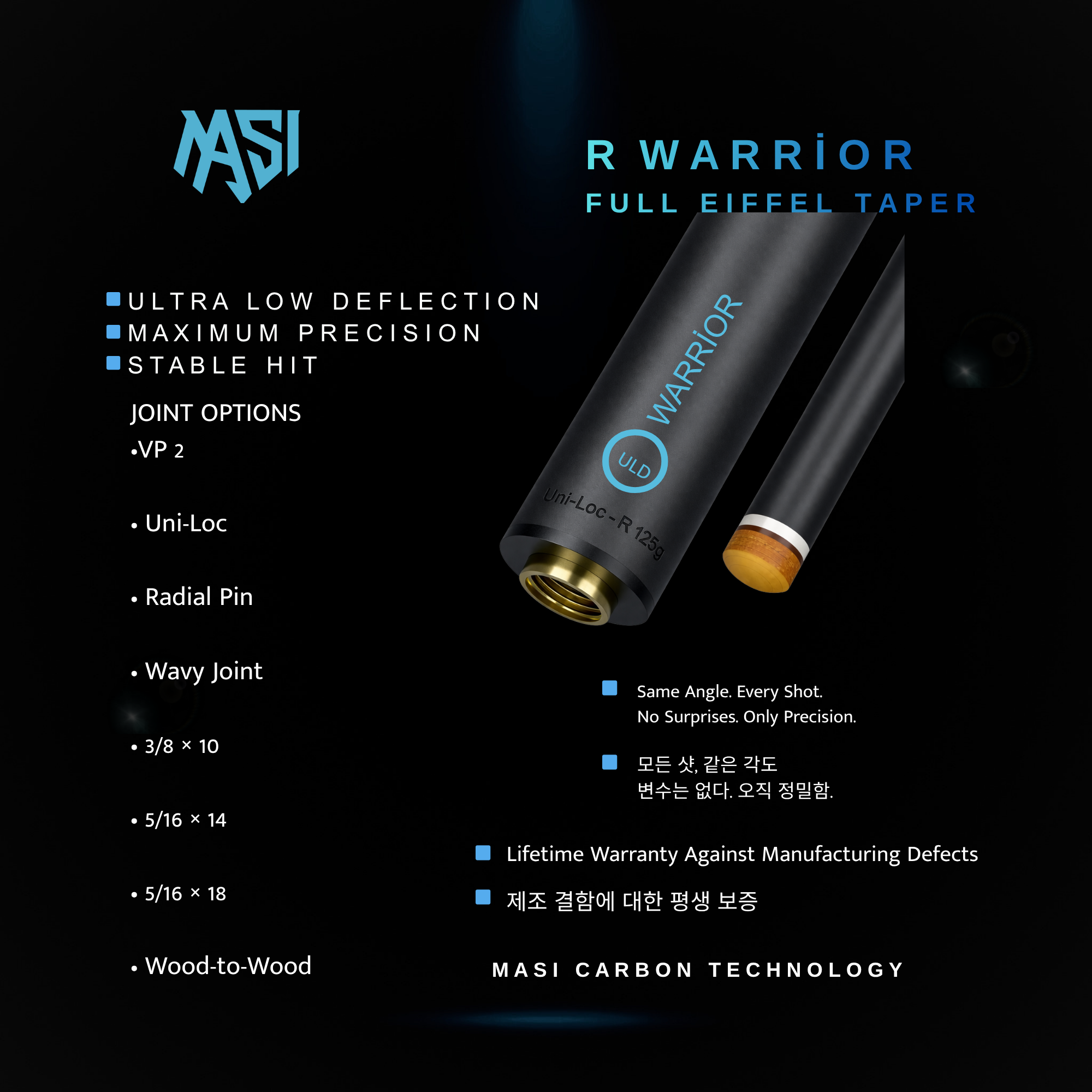
The joint that fuses the two halves of a cue is not merely a mechanical connector; it is a critical engineering element that shapes feel, feedback, and compatibility with different butts. For carbon shaft players, joint choice matters even more because carbon's distinctive vibration profile reaches its full potential only when paired with the right standard. In this article, Masi Carbon compares three of the most common standards — 3/8x10, Uni-Loc, and Radial Pin — through a practical lens.
3/8x10: Classic Precision
3/8x10 is, as the name implies, a screw-in joint with a 3/8-inch diameter and 10 threads per inch. It has long been a reference standard in the custom cue world. Its relatively long, robust threads create a tight, settled connection between butt and shaft. This geometry contributes to a more solid, "gathered" feel at impact — often preferred by players who want strong feedback, especially on the break.
Models like Zafira and Titan X can be specified in a 3/8x10 configuration, making this a practical choice for players seeking broad compatibility with classic wooden butts.
Uni-Loc Quick Release: Speed and Repeatability
Uni-Loc is the world's best-known quick-release joint system. It joins the two halves of a cue in roughly half a turn. Mechanically, it pairs a steel pin with a precise threaded receiver, holding tolerance even across repeated assemblies. That stability is a real advantage for tournament players, as the shaft-to-butt axis stays consistent stroke after stroke.
On the carbon shaft side, Uni-Loc delivers quick setup with low vibration transfer. Our Warrior Carbon Shaft series can be produced in Uni-Loc variants as a practical choice for the modern player.
Radial Pin: Tight Precision and Self-Centering
Radial Pin features visually fine threads and a typically self-centering geometry. Its pin shape locks the shaft and butt onto the same axis with sub-millimeter deviation. The result is minimal energy loss at impact and an exceptionally clean transfer of feel.
Players who prize precision — and disciplines like carom and tight position play that demand fine accuracy — gravitate toward Radial Pin. On performance-focused Masi Carbon models such as Black Mamba, a Radial Pin configuration is a natural answer to a player's demand for maximum feedback.
Ensuring Compatibility with Masi Carbon Shafts
The most common mistake when ordering a carbon shaft is overlooking the joint standard of the existing butt. Masi Carbon produces shafts in multiple joint variants; specifying the correct joint type at order time guarantees millimeter-level tolerance match. If you're unsure, sharing clear photos of your current butt is enough for our team to recommend the right configuration.
Every Masi Carbon shaft also passes a measurement check on pin thread profile and receiver diameter before shipping. This delivers a premium seating feel even when paired with butts from other brands.
Which Joint Is Right for You?
If you come from a classic wooden butt background and want a solid, gathered feedback, 3/8x10 is an intuitive pick. If you swap shafts often as a tournament player, Uni-Loc's convenience saves real time. For technical players seeking maximum precision and self-centering, Radial Pin is a strong candidate. At Masi Carbon, our aim is to match each player's style with the right joint–carbon pairing so the product can deliver its true potential.