Carbon Fiber Physical Properties — Modulus, Density and Flexibility
Carbon fiber's tensile strength, modulus and density directly shape how a cue feels at impact. Here are the numbers that matter.
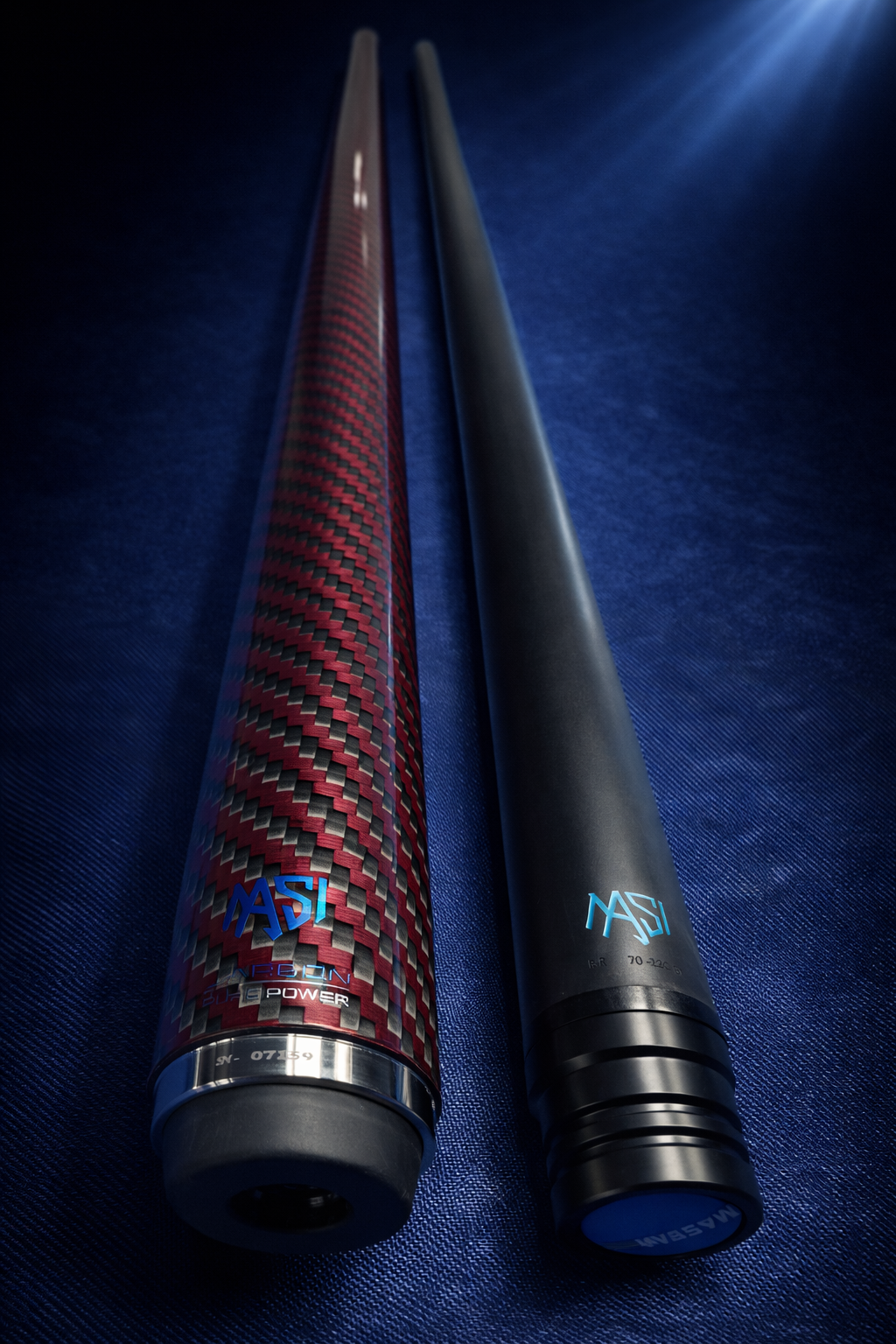
Carbon fiber sits at the heart of modern cue design. The reason it has displaced years of seasoned maple in serious play is not marketing — it is three very specific physical numbers: tensile strength, elastic modulus, and density. Together, these values determine the cue's weight in your hand, the tone at impact, and the vibration that travels back to your bridge fingers when you miscue. Understanding them is the difference between buying a cue and choosing one.
Tensile Strength: Why 3500 MPa Matters
A standard T700-class carbon fiber offers around 3500 MPa of tensile strength. For comparison, structural steel sits at 400-550 MPa, and hard maple at only 100-130 MPa. In other words, at the same cross-section, carbon fiber can resist roughly seven times more force than steel and over thirty times more than wood. In practice this means the shaft can be made thinner without risk of cracking, even under aggressive break shots.
Modulus: Stiffness in the 230-380 GPa Range
The elastic modulus tells you how 'stiff' a material is — how little it deflects under load. Standard carbon fiber lands around 230 GPa, while high-modulus composites can reach 380 GPa. Maple is only 12 GPa and steel about 200 GPa. The higher the modulus, the cleaner and more accurate the strike; however, very high modulus reduces vibration damping.
This is exactly why the Masi Carbon team uses different ply layups in the R Warrior, F Warrior and C Warrior models — modulus and damping are tuned to player style. Pool and carom players do not want the same shaft stiffness.
Density: 1.55-1.8 g/cm³
Carbon fiber composites have a density of roughly 1.55-1.8 g/cm³. Maple is 0.7 g/cm³ and steel is 7.85 g/cm³. Carbon is slightly heavier than wood but four times lighter than steel. That density window gives designers the freedom to build a thin, hollow shaft while keeping total cue weight in the 18-19 oz target — and to shift the balance point exactly where the player wants it.
Specific Strength: The Real Advantage
Engineers look at 'specific strength' — strength per unit density. Carbon fiber scores around 2000 kN·m/kg, roughly 25 times that of steel (~70 kN·m/kg). A cue that is both light and exceptionally resistant to bending is only possible because of this combination. It is why premium shafts such as the Zafira and Titan X stay rigid even with very fine tapers; they refuse to whip.
Flexibility and Return Speed
Carbon fiber is essentially non-viscoelastic at audio-rate frequencies: a shaft that bends on impact snaps back to its axis within milliseconds. Maple shafts return more slowly, which can transfer unintended angles to the cue ball. The low 'whip' of carbon shafts is particularly valuable on long bank shots, where consistency is everything.
In short, the three numbers — 3500 MPa tensile, 230-380 GPa modulus, 1.55-1.8 g/cm³ density — explain in engineering language why modern carbon shafts outperform their wooden ancestors. Asking a manufacturer about these values is the fastest way to gauge how seriously they treat the craft.