Carbon Shaft vs Maple Shaft: Detailed Comparison
Carbon shaft or maple shaft? Detailed comparison of deflection, weight, durability, price and performance. Find out which shaft suits you best.
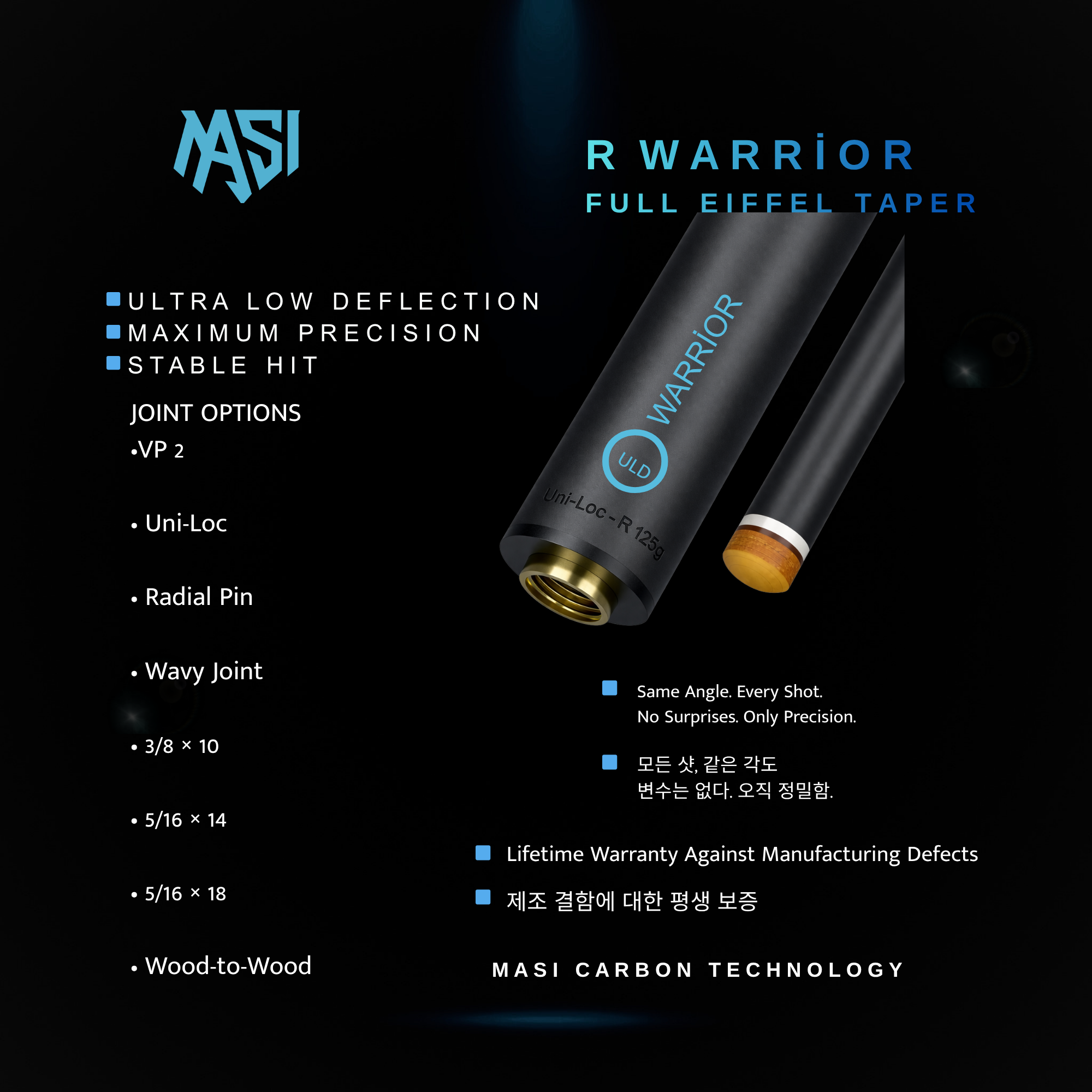
One of the most frequently debated topics in billiards: carbon shaft or maple shaft — which is better? Both have strengths and limitations. In this guide, we compare them across 7 critical criteria and explain which suits different player profiles.
1. Deflection
Shaft deflection (or "squirt") is the cue ball's deviation from the intended path when applying english. Lower deflection means more consistent accuracy.
- Carbon shaft: Low deflection. Carbon fiber's homogeneous structure optimizes end-mass distribution. Deflection is approximately 30% lower than maple.
- Maple shaft: Standard deflection. Tied to natural grain and density variance. "Pro-tapered" maple shafts reduce this but never reach carbon levels.
Winner: Carbon shaft. Particularly important for long shots and english.
2. Consistency
- Carbon shaft: Tight manufacturing tolerances. Every shaft performs identically. No practical difference between two of the same model.
- Maple shaft: As a natural material, no two shafts are ever exactly alike. Even the same shaft responds differently across seasons, humidity, temperature.
Winner: Carbon shaft. Critical advantage for tournament play.
3. Durability and Lifespan
- Carbon shaft: 10-15 years of original performance. Resistant to humidity, temperature, impact. No swelling or cracking.
- Maple shaft: 3-5 years optimal use. Then loses elasticity, swells, starts to crack. Extreme humidity or temperature can cause permanent damage in a single session.
Winner: Carbon shaft. Long-term economic choice.
4. Shot Feel
- Carbon shaft: Firmer, "sharper" feel. Vibration damping reduces hand fatigue, but some players find it "cold" or "robotic".
- Maple shaft: Warmer, more "natural" feel. Many classic players develop emotional attachment to this character.
Winner: Tie. Pure personal preference. Adapting to carbon may require 1-2 months of regular play.
5. Maintenance
- Carbon shaft: Very low maintenance. Tip changes and light wiping suffice. No sanding, burnishing or oiling needed.
- Maple shaft: High maintenance. Regular sanding, wood treatment oil, humidity protection applications. Incorrect care causes permanent damage.
Winner: Carbon shaft.
6. Price
- Carbon shaft: $300-$1500 range. Premium models on top tier.
- Maple shaft: $60-$450 range. Single-piece premium maples may reach $750.
Winner: Maple (short term). But since maple shafts need replacing every 5 years, carbon shaft is more economical over a 15-year horizon.
Conclusion: Which Is Right for You?
Choose Carbon Shaft If:
- You play pool or 3-cushion carom
- You frequently use english
- Consistency on long shots matters
- You play at tournament/competitive level
- You want low maintenance
- You're thinking 15-year investment
Choose Maple Shaft If:
- You're a classic snooker player
- You value "natural" shot feel
- You have a low starting budget
- You honor traditional cue culture
Learn more at our Technology page or browse models at Products.