Cue Joint Systems: Which Connection Suits You?
Billiard cue joint systems guide: Radial, Uni-Loc, piloted joint and thread systems. Pros, cons and Masi Carbon compatibility.
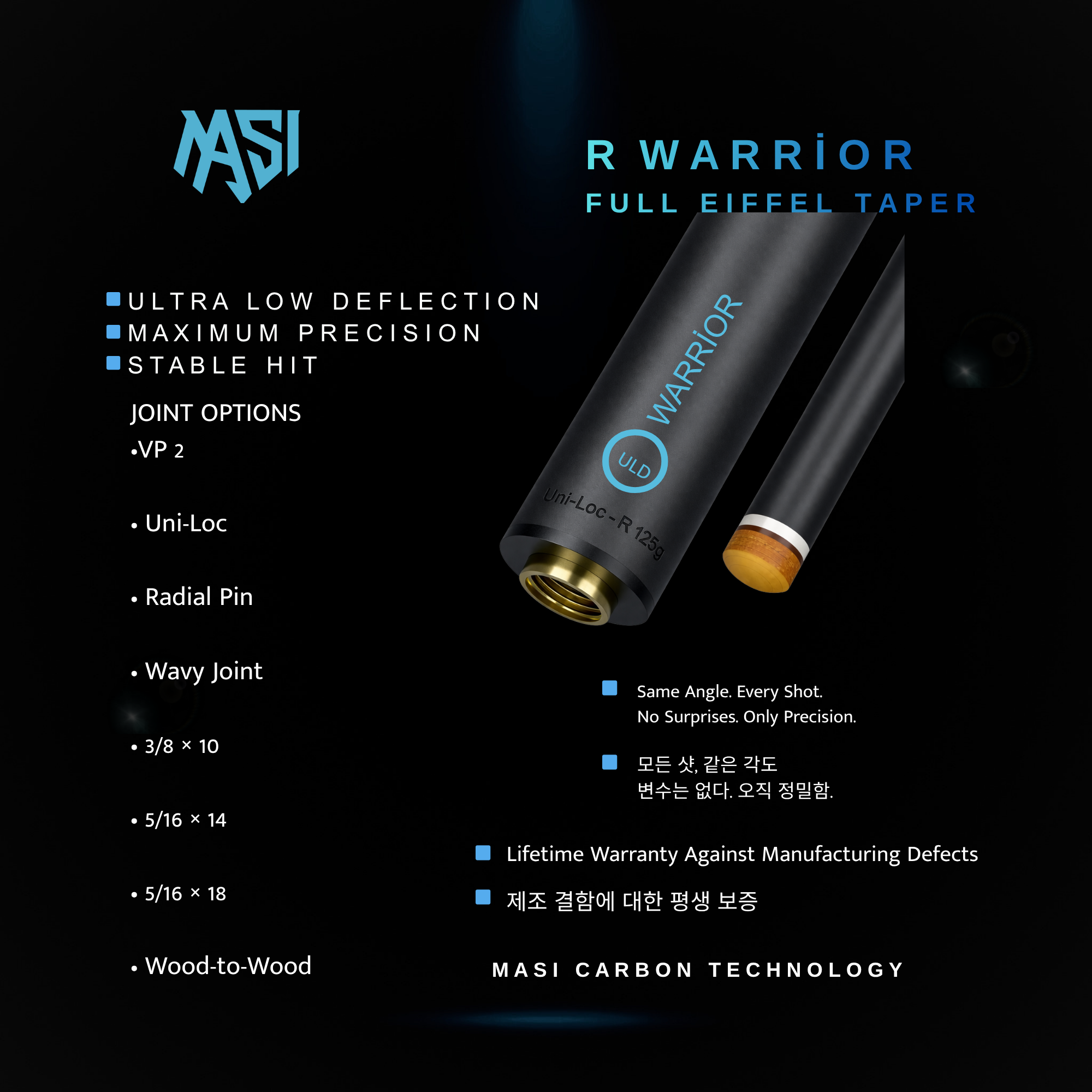
The cue joint is the critical component that connects the butt and shaft. The right joint choice affects many factors from stroke feel to maintenance ease. In this guide we examine the most common joint systems and Masi Carbon compatibility.
Radial Pin Joint: Precise and Popular
Radial pin joint is a system where the pin is on the butt side, working with 3/8x8 or similar dimensions. It fits tightly into the shaft hole and provides perfect alignment. Advantages: consistent tight connection, structure suitable for low deflection, easy attach/detach. Disadvantages: wear risk with over-tightening, pin length variability in some models. Masi Carbon models using Radial joint are compatible with many shafts on the market.
Uni-Loc Joint: Fast and Practical
Uni-Loc is a joint system known especially for its quick-release variants. It can be attached and detached in one turn; ideal for those who want to change shafts in tournament settings. Pros: fast change, standard dimensions, wide compatibility. Cons: some players report less "tight" feel, versions using plastic components may wear over time. Masi Carbon offers Uni-Loc compatible butts.
- Radial: Precise, low deflection friendly
- Uni-Loc: Fast change, tournament practice
- Piloted: Traditional feel, strong connection
Piloted Joint: Traditional Choice
In the piloted joint system, the shaft end enters (pilots into) the butt's joint cavity, providing extra stability. It is typically used with 5/16x14 or 3/8x10 threads. This system gives a more "organic" stroke feel; some players say piloted systems transmit more feedback. Disadvantage: dust and dirt buildup can cause problems in the pilot area, regular cleaning required. Masi Carbon piloted joint option especially appeals to those transitioning from wood.
3/8x10 and 5/16x18 Thread Systems
3/8x10 (or 3/8x8) offers thicker threads; provides tight connection with less tightening, wear resistant. 5/16x18 has finer threads; more turns required but some players feel a "softer" connection. Both systems are common; check market compatibility if you plan to change shafts or add extensions. Masi Carbon models are available in both 3/8x10 and 5/16x18 configurations.
Masi Carbon Joint System and Compatibility
Masi Carbon uses its own optimized joint system—but compatibility with standard dimensions is a priority. Masi Carbon shafts have been tested with other butts of the same joint type. Common joint types are supported for extensions and jump cue adapters. Joint type selection is available for custom orders. We recommend trying to determine which joint suits your playing style.