Cue Balance (Forward / Center / Rear) — How It Feels
A cue's balance point shapes the feel of every stroke more than the total weight ever will. Here is how the 18-19 inch window changes the game.
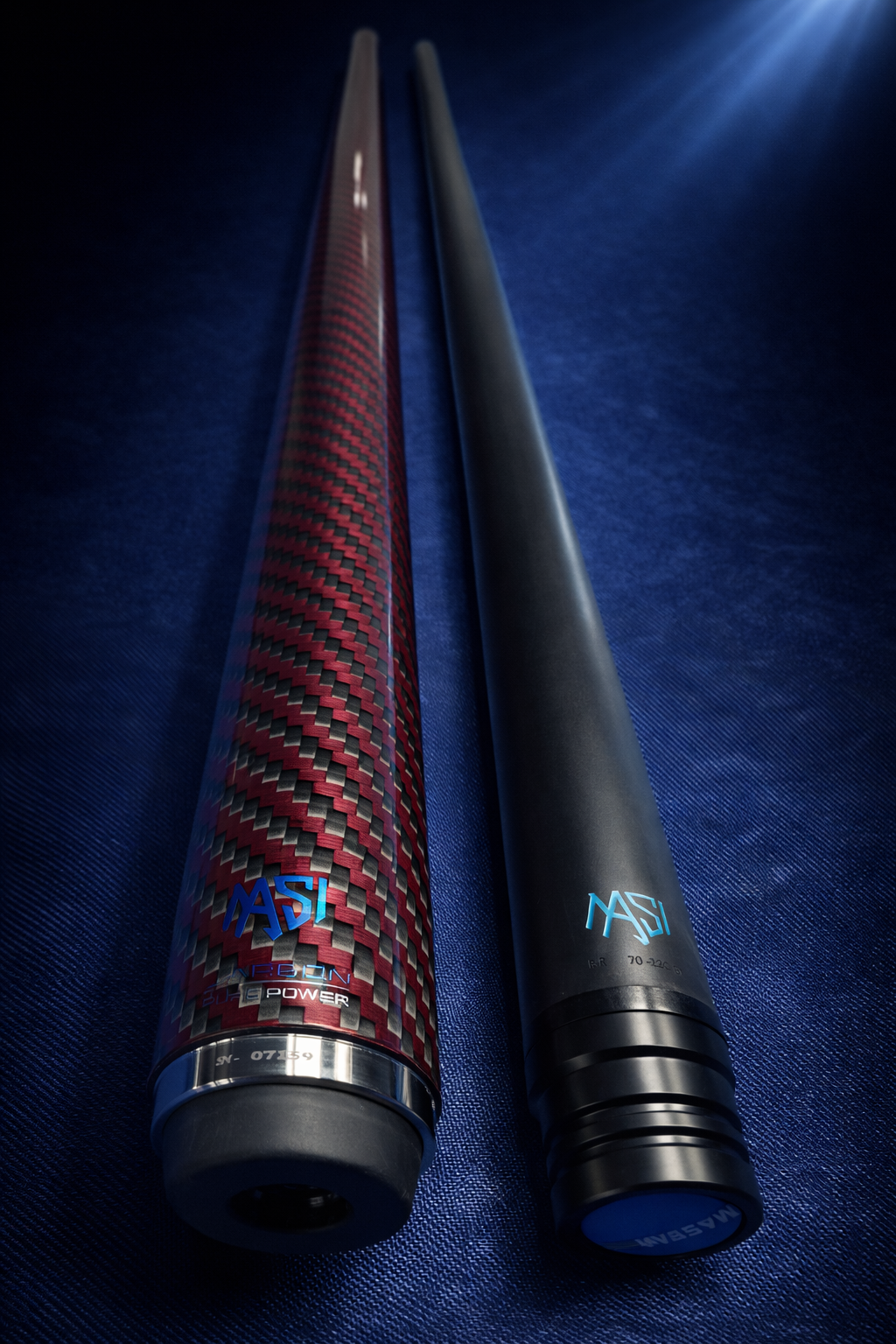
Two cues can both weigh 19 oz and feel completely different in your hand. The reason is almost always the same: balance point. More than total weight, where that weight sits along the cue defines how every stroke feels. Professionals look at this number among the first three when buying, and it almost always falls in the 18-19 inch (45.7-48.3 cm) window measured from the butt — a tiny range that defines your playing character.
How to Measure the Balance Point
Measurement is simple: rest the cue on a thin support and slide it until it sits perfectly level. The point under the support is the balance point. Then measure from there down to the butt. Less than 18 inches is 'forward', 18-19 inches is 'center', and over 19 inches is 'rear'. Most makers list this on the spec sheet; if they don't, you can measure it yourself in minutes.
Forward Balanced (~17.5-18 in): Break and Power
When the balance sits closer to the butt — under 18 inches — the cue feels nose-heavy. That sensation becomes a real advantage on break shots: during the swing, momentum concentrates in the forward mass, transferring harder yet still controlled energy into the cue ball. Pool players, especially in 9-Ball, prefer forward-balanced break cues. The Forward configuration of the Masi Carbon F Warrior is built exactly around this philosophy.
Center Balanced (~18.5 in): The All-Rounder
Center-balanced cues fall in the 18.25-18.75 inch range and are the option least likely to disappoint over a long playing night. They behave well on finesse strokes and remain composed when you need power. Beginners and intermediate players are usually advised to start here, simply because they don't yet know which direction they lean. The R Warrior keeps a classic center balance, appealing to players who want one cue for both pool and carom.
Rear Balanced (~19+ in): Precision and Finesse
When the balance moves past 19 inches, weight shifts back toward your grip hand. The cue feels 'light at the tip' and rewards short, delicate strokes — the soft positional shots in pool or three-cushion control strokes in carom. Most carom players love rear-balanced cues for exactly this reason. The C Warrior is tuned to this precision need, and pairing it with a premium carom shaft like the Zafira makes the difference even more obvious.
Tuning Balance with Butt Weight
Many modern cues let you adjust the balance point in 0.25-0.5 inch steps via butt weight bolts. That means the same shaft and forearm can move from forward to center, or even to rear. The feature matters when you want a single shaft, like the Titan X, to adapt across playing styles. Look for 'adjustable balance' or 'weight bolt' on the spec sheet.
Which Balance Should You Choose
A practical rule: if you mostly play break and power shots, go forward; if you are an all-round technical player, choose center; if carom or very fine positional play dominates your game, go rear. Try all three when possible — most players report a different preference after testing than what they predicted. Balance is the most personal dimension of cue-player fit, and when it is right, the confidence it adds to your stroke is something no other spec can deliver.