Mental Performance in Billiards — Pre-Match Preparation
Billiards is as much a mental game as a physical one. Pre-match rituals, breathing, visualization and focus techniques determine performance.
Pros often say: 'A match begins before the player reaches the table.' The mental side of billiards is as decisive as the technique. Calm breathing, a planned ritual and focus control determine how a player starts the match and how they recover when things slip.
Pre-Match Ritual
Professionals enter every match the same way. Opening the case, checking the tip, approaching the table — all in a fixed sequence. This ritual flips the brain into 'match mode' and reduces anxiety. Even a five-minute pre-match routine makes a measurable difference for amateurs.
Breathing Control
Under stress, breathing becomes shallow and fast — the root cause of body tremor before a stroke. The 4-7-8 method (inhale 4, hold 7, exhale 8) calms the nervous system. Before a long pot or a critical 9-ball shot, one 4-7-8 cycle measurably lowers miss probability.
Visualization
Mentally rehearsing the shot improves motor control. Seeing the ball's path to the pocket, the cue ball's destination and the tempo in your head helps the body repeat that motion in real life. Top snooker and carom players use this technique daily.
Inner Speech Management
Negative self-talk like 'don't miss this' tightens muscles. Pros replace it with neutral technical phrases like 'stay calm, follow your rhythm'. The point isn't silencing the voice but managing its content.
Recovery After a Miss
What you do after missing matters more than the miss itself. Pros give themselves 5–10 seconds of breath and posture, then walk back to the table. Analysis happens after the match. Debating the miss mid-match infects the next shot.
Equipment's Mental Effect
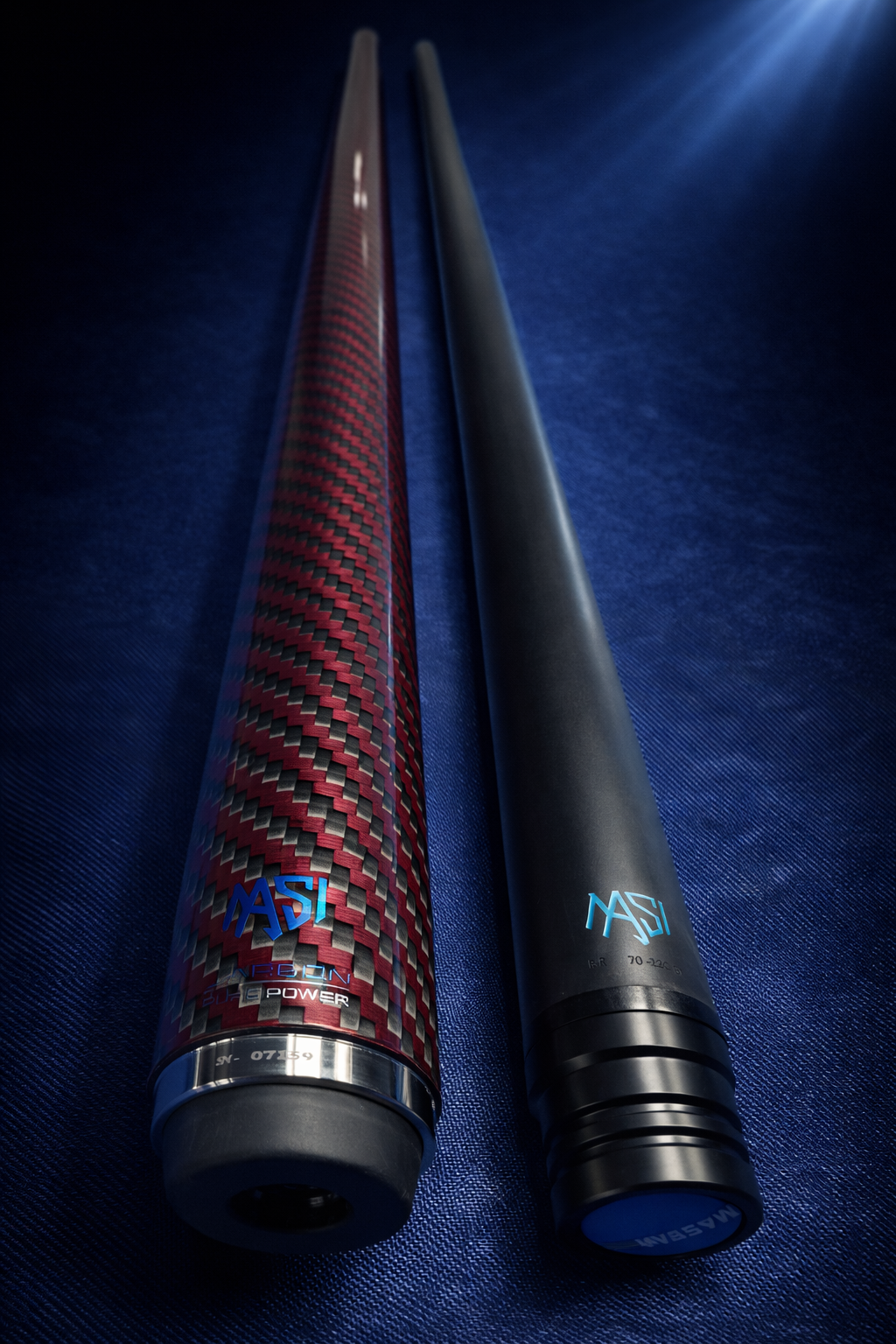
A cue you trust plays a bigger mental role than people realize. A consistent carbon shaft tells the player 'same stroke, same result'. Masi Carbon and Warrior users frequently report that equipment confidence translates into in-match composure.
Post-Match Reflection
Spend five minutes after every match writing notes: which shots clouded your mind, where you panicked, which ritual helped. Over time this becomes your personal mental playbook, making future preparation far more targeted.