Billiards Tournament Regulations — Basic Rules
Carom, pool and snooker have distinct official rules in tournaments. This guide summarizes what every player must know before their first event.
No matter how strong a player is at home, their first tournament usually surprises them with rule-based situations. What counts as a foul? When is it ball-in-hand? Who breaks first? Is there a shot clock? This guide summarizes the basic tournament rules across the three main disciplines.
Carom Tournaments (UMB Rules)
Three-cushion carom follows international UMB rules. The cue ball must contact at least three cushions before the second object ball. A successful point continues the inning. Match scores are usually 30 or 40 points; tie-breaks use a short set or a single point. The equal-innings principle ensures both players receive the same number of innings.
Pool Tournaments (WPA Rules)
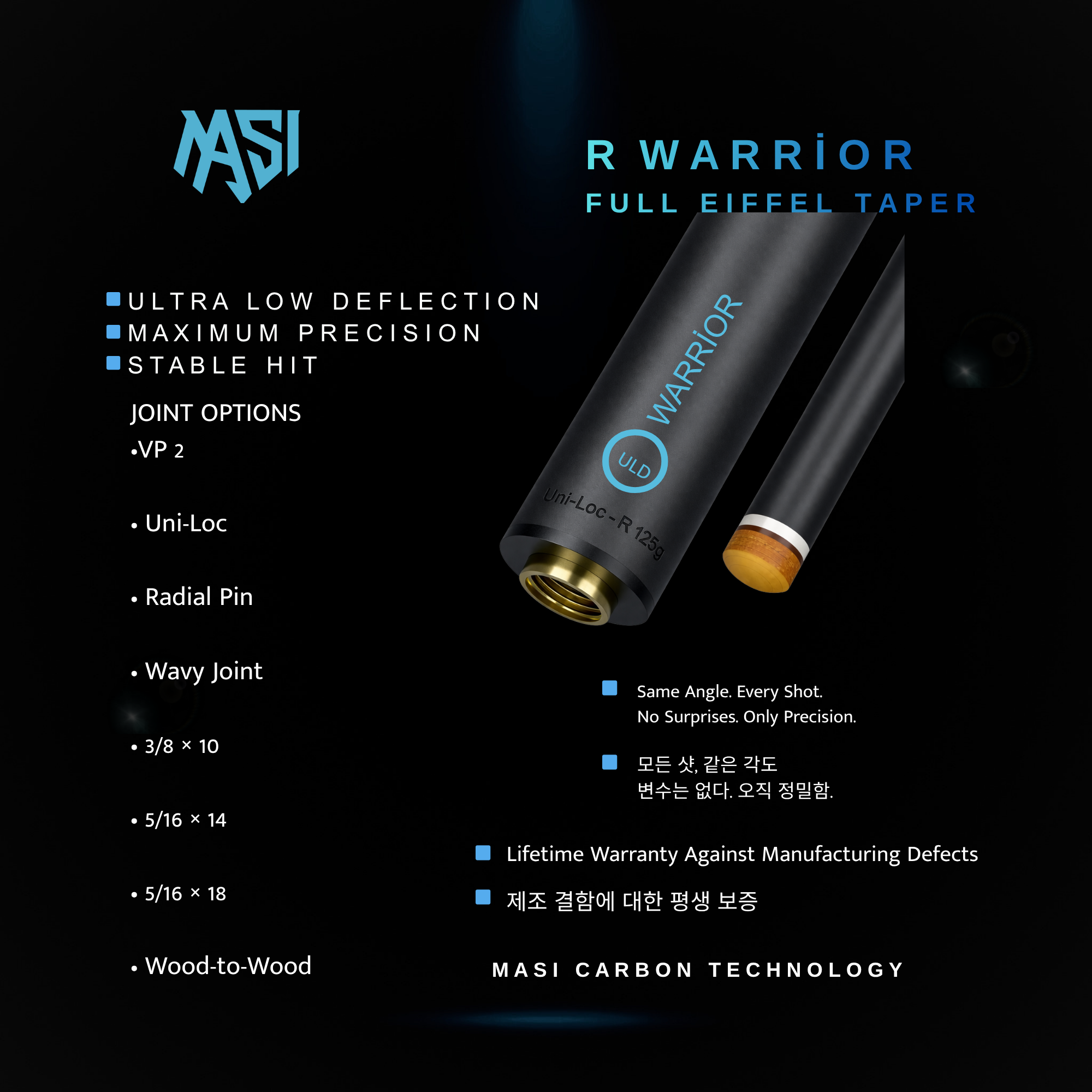
The WPA defines the global rules for 9-Ball and 10-Ball tournaments. Push-out after the break, ball-in-hand after fouls, jump shot rules and scratch consequences are all standardized. The WPA also regulates cue length, tip diameter and shaft materials such as carbon. Masi Carbon shafts are produced within WPA-approved dimensions.
Snooker Tournaments (WPBSA Rules)
Professional snooker is organized under the WPBSA. Frame extension on equal scores, free ball, foul and the miss rule are central. The miss rule allows opponents to request a replay if the referee judges insufficient effort, and it shapes the depth of safety play at top level.
Foul Definitions
The foul list differs across disciplines. In pool: hitting the wrong ball, scratching, double hits and push shots. In snooker: failing to hit the on-ball first, free ball violations and tip-related fouls. In carom: fewer fouls, but shot clock or time violations can count as fouls in some tournaments.
Shot Clock and Rhythm
Modern tournaments increasingly use a shot clock. Pool and snooker apply 30–60 second limits, forcing fast decisions. Carom often uses inning-time limits. Practicing with a clock is an advanced discipline habit.
Referee and Disputes
The referee's decision is usually final, but high-level tournaments may include video review. Players who want to dispute should communicate professionally; turning the game into an argument is unprofessional. Sportsmanship is part of being a professional player.
Preparation Tip
Before your first tournament, read the relevant federation's rulebook end to end at least once. Take notes, then run a mock match with a coach simulating edge cases. A player who knows the rules stays calm even when mistakes happen; a player who doesn't will crack under a small foul.