Billiards Conditioning — Back and Arm Health
Hours bent over the table can ruin a player's back and shoulders. Proper warm-up, posture and the lightness of carbon shafts protect a long career.
Billiards looks like a calm sport from the outside, but the physical load is heavier than people think. Bending over the table for hours, repeating shoulder and arm swings, locking eyes on a single point — all create real wear. Professional players treat conditioning and posture as part of training, not extra.
How Billiards Tires the Body
The most loaded areas are the lower back, right shoulder (for right-handed players) and the back of the neck. While bent, the lower back stays in isometric contraction; the neck holds the head forward. Hours of this position produce the classic 'table back.'
Pre-Match Warm-Up
Five minutes of dynamic warm-up is enough. Neck rotations, shoulder circles, elbow stretches, lower-back rotations and a back bridge. Add wrist and finger stretches to support fine motor control. Going to the table cold not only hurts the first 30 minutes but raises tear risk.
Stance and Lower-Back Load
Correct stance is the strongest factor in reducing back load. Front foot slightly turned out, back foot aligned, front knee softly bent. With these three points, weight transfers into the legs and the back relaxes. Bad stance creates fast back pain; good stance allows hours without fatigue.
Shaft Weight Effect
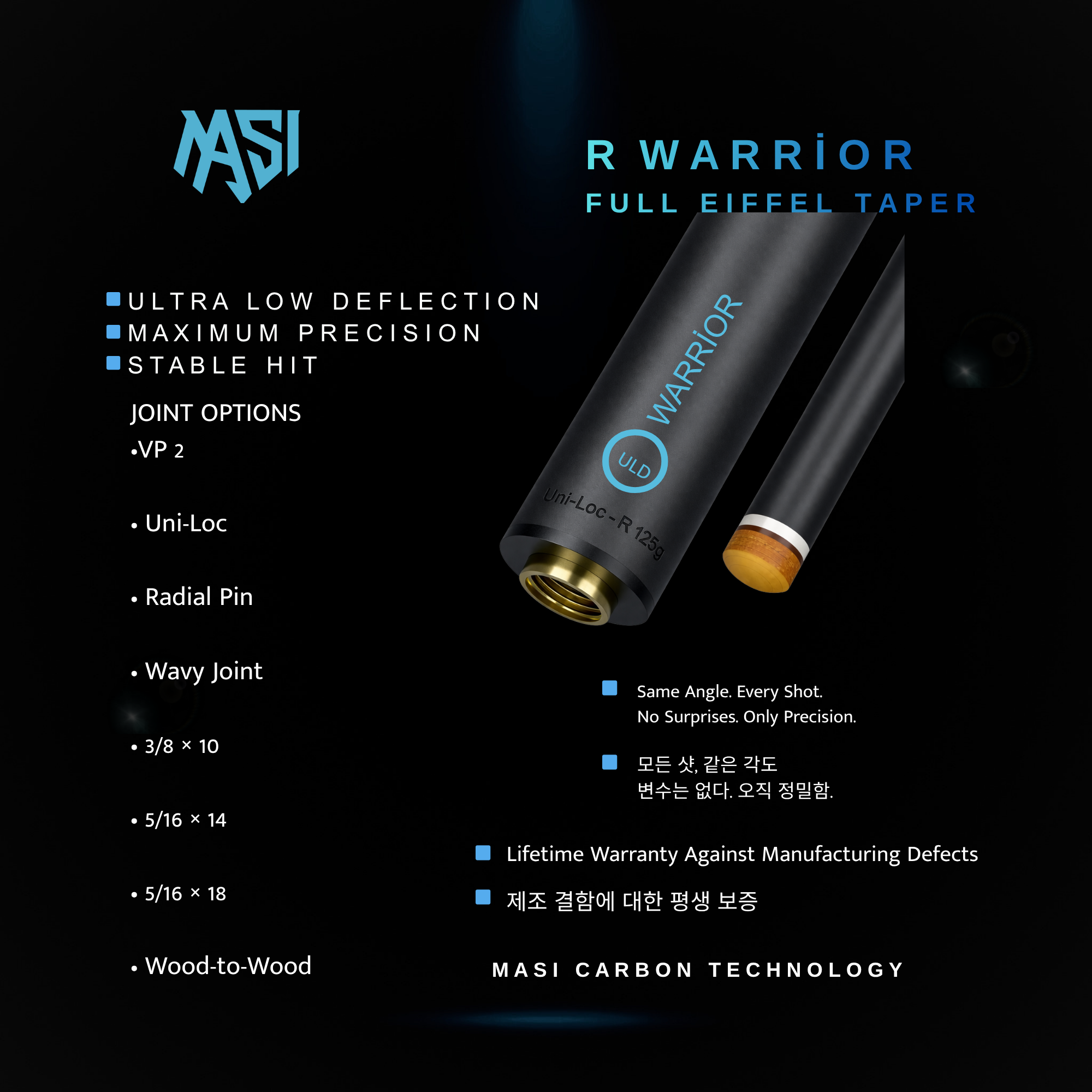
Wood shafts can fatigue the arm in long matches. Carbon shafts often have lighter or better-balanced weight distribution, easing the swing. Masi Carbon and Warrior models also dampen vibration, reducing micro-shocks at the wrist and elbow. This lowers both acute fatigue and long-term wear.
Hourly Break Discipline
Coaches recommend a 5-minute break every 50–60 minutes during practice. Stand up, walk briefly, open the shoulders, rotate the lower back. Practice quality doesn't drop — it rises, because the body never accumulates fatigue.
Endurance Training
Two or three short core sessions a week are gold for billiard players. Plank variations, dead bug, glute bridge and bird-dog strengthen the back-core-glute axis. These movements build a spine that can bend for hours. No gym needed — 20 minutes on a mat at home is enough.
Long-Term Health
Billiards is a marathon sport. A player who builds conditioning in their 30s still plays at top level in their 50s. Those who skip it retire early. Anyone who loves billiards should put their body at the center of training alongside technique.