Billiards Practice — Drill Routine 101
Progress in billiards comes from regular, focused practice. This guide outlines a starter routine of stop shot, follow, draw, and position drills you can run weekly.
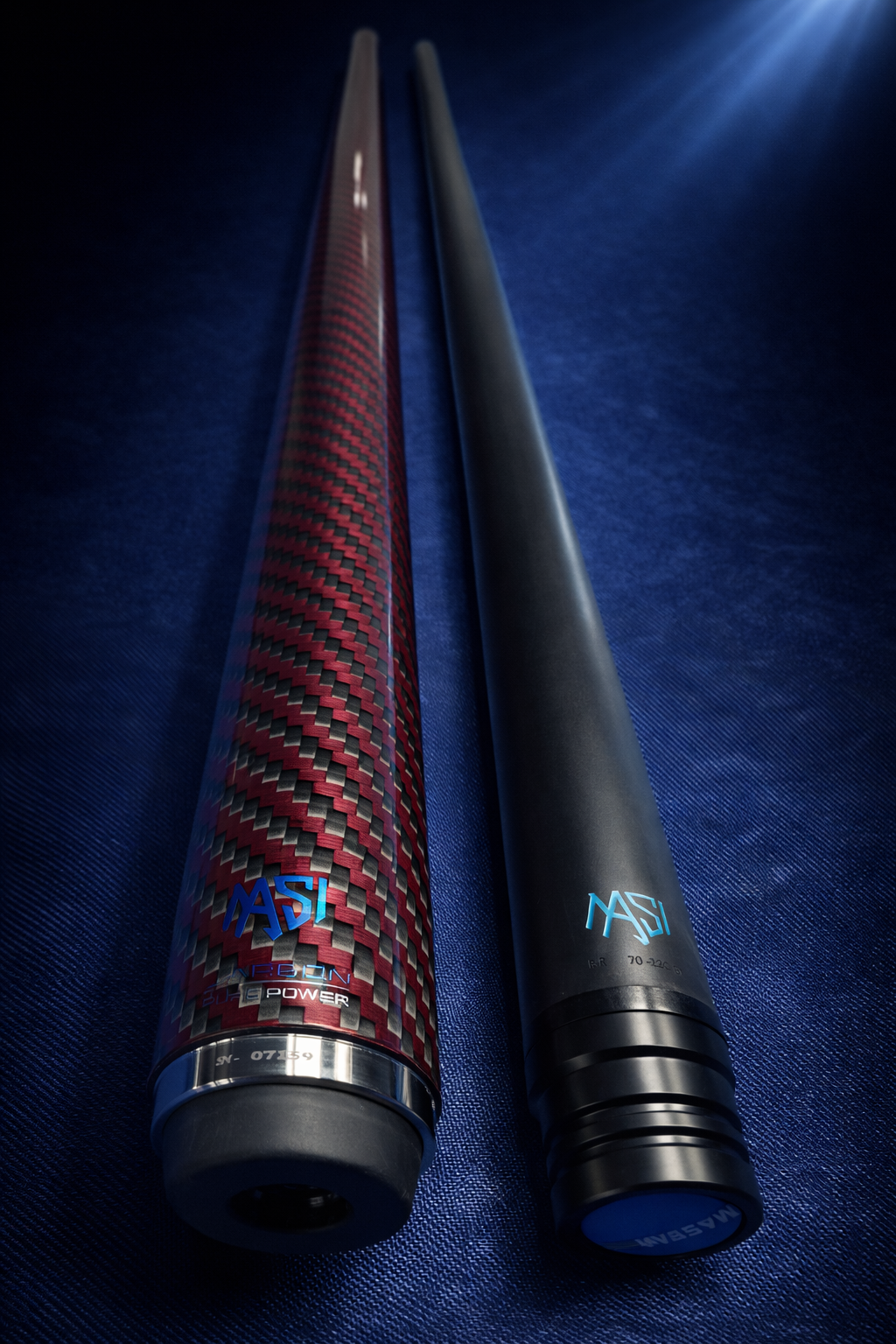
Steady progress in billiards doesn't come from random play — it comes from focused, measurable practice. This article shares core drills any player can add to their weekly routine, a suggested practice schedule, and key technical notes for cue ball control.
1. Stop Shot Drill — The Foundation of Clean Stroke
The stop shot means hitting the cue ball straight into an object ball and stopping it dead. This drill is the foundation of center-ball contact and correct cue speed. Place the object ball near a pocket and shoot from 1- and 2-diamond distances, 10 attempts each. If the cue ball doesn't fully stop, your tip contact isn't centered, or your tempo is off. Low-deflection carbon shafts reduce squirt-induced error in this drill — shafts like Masi Carbon Warrior give beginners cleaner feedback.
2. Follow and Draw Drill — Forward and Backspin
Follow (above center) and draw (below center) are the alphabet of cue ball control. From the same position, hit 1 mm above center, then 1 mm below. Goal: the cue travels 1 diamond forward (follow) and 1 diamond back (draw) on the same stroke pattern. Doing this consistently across 20 shots means your tip precision is solid. Important: keep your cue level on draw — don't elevate.
3. Line-Up Drill
Place 15 balls in a line (often along the line of the side pocket). Pot them one by one, in order, without missing. This drill builds stamina, rhythm, and position planning. Starter goal: 8/15. Advanced: 14+/15 and zero scratches. Run this drill after warming up, not first thing in the session — a cold start doesn't reflect your real level.
4. Position Practice — Thinking About the Next Ball
What separates amateur from intermediate isn't potting a ball — it's leaving the cue ball where the next shot is easy. Place 3 balls (numbered 1-2-3) and define position zones for each. Pot in order while landing in the next zone. If you miss position, restart. This drill is the closest to real match scenarios.
5. Suggested Weekly Practice Schedule
An efficient starter program: Monday: 30 min stop shot + 30 min follow/draw. Wednesday: 45 min line-up + 15 min break practice. Friday: 60 min position drills (3-ball, 5-ball, 9-ball). Weekend: Match play — test drills under real score pressure. Total: 4-5 hours weekly. Less slows progress; more leads to fatigue-induced bad habits.
6. Equipment and Consistency
Drills only give honest feedback through a consistent cue. If cue ball behavior depends on shaft variability, you can't analyze your mistakes accurately. Masi Carbon's Zafira and Titan X carbon shafts are minimally affected by heat and humidity, delivering consistent feedback. That directly shapes the quality of your practice.
Conclusion
Practice works when it's measurable, not when it's just hours logged. Set one goal per session, write the numbers down, track weekly progress. Three months of disciplined drills will teach you more than a year of casual play.