9-Ball Strategy — Break and Run-Out Techniques
In 9-Ball the break sets the tempo, but matches are won with disciplined run-outs. Carbon shafts, planned patterns and cue ball control are the foundation.
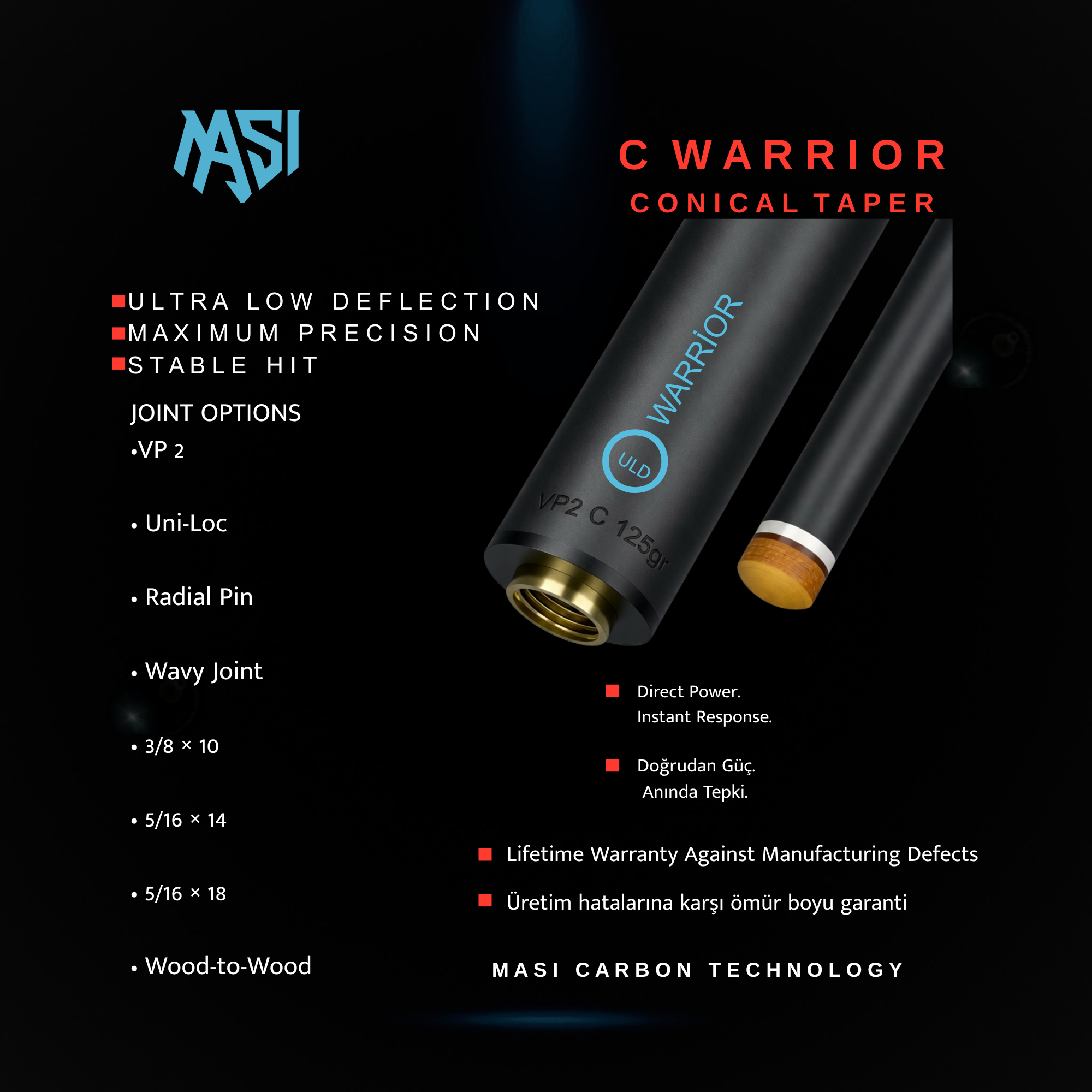
9-Ball is the discipline where speed and calculation meet on the same cloth. If a player can clear the table after the break, the opponent never gets a turn, which is why both break shot quality and run-out planning directly determine win rate. The low deflection of Masi Carbon shafts makes the geometric routes used by professionals more predictable.
Setting Up the Break
The cut break is the dominant modern 9-Ball break. Striking the 1 ball slightly below center pushes the 1 toward a corner pocket while parking the cue ball in the middle. Weight, tempo and rhythm are the three pillars of a break; alignment matters more than raw power.
A carbon shaft absorbs vibration, reducing the cue ball jump risk. The ball stays on the cloth, giving you a second chance to plan the run-out from the middle of the table.
Reading the First Ball
The shot after the break is often the decisive moment. Before striking the 1, scan the 2, 3 and 4 ball positions: identify clusters, clean balls and the lanes the cue ball must travel. This read should not exceed five seconds — anything longer breaks rhythm.
Pattern Play and Three-Ball Foresight
The golden rule of run-outs is to think three balls ahead. While potting the current ball, the cue ball must land at an angle that opens the next ball — and ideally the one after that. Carbon shafts make transitioning between follow, draw and stun shots low-effort, supporting this kind of layered planning.
Breaking Up Clusters
A 9-Ball table almost always has a cluster or two. Do not break clusters intuitively — plan a combination, kiss or kick shot that uses your required ball as the breaker. This way, one stroke pots a ball and frees the cluster simultaneously.
Push-Out and Decision Moments
The push-out rule deepens 9-Ball strategy. When the position after the break is brutal, a smart push-out can hand the opponent a difficult choice. Pros use push-out not only offensively but also as a defensive weapon.
Run-Out Discipline
On every run-out shot, ask three questions: Will the ball drop? Is the cue ball arriving at the right angle? Is there a scratch or kiss risk? If any answer is unclear, reconsider. Masi Carbon and Warrior shaft users frequently report that the consistency of fine spin transfer is the biggest advantage — it lets you repeat the same correct decision shot after shot.